The contemporary automobile is equidistant from the past and future: in my own household I have both a large engined petrol sports car and hybrid electric vehicle. The past and the future converge in the electric vehicle, however the arrival of the future has not been without challenge, apprehension and en masse ridicule. Throughout this essay, entitled The Electric Car Problem: An Investigation, we will explore the current shape and form of the purely electric vehicle market, the environmental advantages and disadvantages of electric vehicles and outline a number of pertinent issues relating to electric vehicles and their increased adoption. However, the considerable ‘sticker-price’ of electric vehicles, in comparison to vehicles powered by internal combustion engines, presents a considerable to their increased uptake. In order to demonstrate this argument, I will first highlight a number of general trends within the electric vehicle market. Secondly, I will explore the environmental impact of electric vehicles which will be followed by an elucidation and exploration of a number of their specific problems and the discursive mechanisms through which they can be delineated. Thirdly, I will highlight how the production of BEV re-produces relationships of economic dependency between periphery and metropole states Finally, I will demonstrate how Tesla, Inc business models and public policies provide us with a practical illustration of discourse altering practices. However, I will first describe the specific terminology of the electric vehicle market.
This essay largely focuses on the role and function of the purely electric vehicle in the United Kingdom, however examples are drawn from global markets and trends. I wish to extend my thanks to Graham’s insightful The global rise of the modern plug-in electric vehicle for clarifying and highlighting many of the academic issues in this area.
The battery electric vehicle (BEV) is defined as an automobile that is solely powered by electricity that is stored within an internal battery and charged by ‘plugging-in’ the vehicle to an external electric power source. BEV’s are frequently and interchangeably referred to as PEV’s, however, for consistency, I will use BEV to refer to the aforementioned throughout this essay. An example of a BEV is the Tesla Model 3. PHEV refers to plug-in hybrid electric vehicles, which are powered by an externally chargeable battery and an internal combustion engine (ICE). An example of a PHEV is the Toyota RAV4PLUGIN. Hybrid electric vehicles (HEV) are powered by both electric motors and an internal combustion engine, but have no capacity for the internal battery to be externally charged, rather opting for charging via internal mechanisms. An example of a HEV is the Toyota Prius.
In 2009, the market for BEVs, excluding electric bikes and scooters, was virtually non-existent. As Graham notes in `The global rise of the modern plug-in electric-vehicle: “Ten years later, 7.2 million PEVs were operating on roads and highways around the world” (Graham: 2021: p1). In comparison to ICE powered vehicles, the market share of BEVs is small and their adoption has been limited when compared to other new automotive technological developments.
Irrespective of the aforementioned, the market for BEVs, PHEVs and HEVs in the United Kingdom has “experienced strong double digit growth in recent years” (Marketline: 2020: p9). In 2019, HEVs dominated the electric vehicle market, whereas the market share of PHEVs declined by approximately 17.1%. On the other hand, the market share of BEVs expanded significantly experiencing an overall growth of 144%. However, their overall market share of just 1.4% is “still far below the 50% share that the government aims for in the next 10 years” (Marketline: 2020: p18). A driving factor behind the comparatively small, yet developing, market share of BEVs is the relatively small range of options presented to consumers in comparison to their ICE powered counterparts by established and trusted brands. For example, Ford only offers one BEV – the Mustang Mach-E. Whilst it has been described “as a fundamentally very well executed machine” (TopGear: 2021:a), a starting price of £41725 and atypical styling is likely to deter individuals who have previously relied on the brand to provide them with high quality, yet reasonably priced, vehicles. In addition, Vauxhall offers just two non-commercial BEVs – the Corsa-e and Mokka-e which have both received good to moderate reviews and have been described as the ideal electric vehicle for those who are “risk-averse” (TopGear: 2020). Consumers, particularly older generations, are attracted to the perceived quality and trustworthiness of established brands and, irrespective of the quality of their scarce BEVs, it is unlikely that the market share of BEV will challenge that of ICE powered vehicles, PHEVs and HEVs until more ‘trusted’ options are available. Therefore, as Graham has contested: “Automakers vary enormously in how much priority they have given to PEV development” (Graham: 2021: p16). Furthermore, the BEV purchasing process varies considerably from both the consumer and dealer perspective. Firstly, many consumers undertake extensive research prior to into both specific brands, models and powertrain types before consulting a dealership for a test-drive and associated financial details. However, “as the average profit-margin on small electric-vehicles is not as big as it is on conventional crossovers and SUVs” (Graham: 2021: p58) the motivation for car dealerships to expend minimal advertising budgets on vehicles that may not appeal to a wide-ranging demographic is limited. As “seventy one percent of consumers say the vehicle they purchased was the one they picked out before they came to the dealership” (ibid), it is unlikely that consumers who were not specifically searching for a BEV will gravitate towards them if dealer advertising includes little to no examples of BEVs. Secondly, dealership motivation to sell BEVs is limited: “Many dealers perceive that the trend towards PEVs will further complicate their strained business model” (Graham: 2021: p60). The trend towards BEVs is cost-intensive for dealerships as they have to retrain sales people and technicians, purchase complex equipment and re-imagine pre-established sales and maintenance procedures that have been largely unchanged since the 1970s. Additionally, the sale of used ICE powered vehicles tends to be considerably more profitable than the sale of new vehicles for dealerships and as the used-BEV market is extremely small – the dealer motivation to sell BEVs is further reduced. Furthermore, the average delivery time for a new BEV can extend into the 6 month range which results in extended transaction periods, when compared to ICE vehicles, and lower levels of customer satisfaction. As a result of the aforementioned, the traditional consumer-dealer model appears outdated and this is likely to be reversed as dealerships face increasingly constrained budgets and unrealistic targets. To briefly summarise this section, the prospects for the BEV market are concurrently positive and negative. On a positive note, the BEV sub-category of the electric vehicle market has expanded considerably when compared to both PHEVs and HEVS. On a negative note, the selection of BEVs from trusted and established brands is limited and the traditional dealer-consumer relationship is outdated and appears to be unable to accommodate the trend towards BEVs.
The environmental impact of BEVs, PHEVs and HEVs is multifaceted. Proponents of BEVs claim that they are ‘Zero Emissions’, however a sustained analysis reveals that negative environmental impacts are incurred at several points throughout the lifetime of a BEV. Irrespective of the aforementioned, and as Marin and Perales have argued in Environmental Aspects of the Electric Vehicle “alternative vehicle technologies based on electricity are a real solution to the pollution challenge” (Marin and Perales: 2021: p94). ICE vehicles are responsible for a considerable degree of direct emissions which arise from the combustion of petrol and diesel and result in the production of carbon monoxides, nitrogen oxides, unburned hydrocarbons and particulate matter that directly contribute to the degradation and radical altering of the planets environment and ecosystem. Therefore, we can state that ICE powered vehicles directly emit pollutants during the combustion process. On the other hand, emissions incurred in the production of BEVs can be characterised as indirect. Initially, a significant number of emissions arise from the production of electricity. As Marin and Perales note: “This process includes the extraction and transportation of raw material – such as gas or coal – to the generation of power plants, the conversion to electricity, and the transmission and distribution of the electricity through the network does to the charging poles” (Marin and Perales: 2021, p102). The process of electricity generation is extremely emissions intensive, however, and in my opinion, this can be countered by an en masse switch towards more sustainable methods of electricity generation. For example, a nationwide switch towards safe nuclear power could provide an amicable solution to the considerable environmental impact of the nations electricity generation whilst mitigating a number of the financial and, occasional environmental impacts, of ‘green’ electricity production. Secondly, the production of BEVs has a further indirect environmental impact. The batteries of electric vehicles contain a number of rare and precious metals, such as nickel and cobalt, whose extraction, transport and processing incurs a significant negative environmental impact. Furthermore, the disposal and recycling of a number of components, namely the battery (composed of either nickel, cobalt or manganese) and the powertrain aluminium and copper), is extremely energy intensive and subsequently can be characterised as having a negative environmental impact. However, as BEV batteries can generally not be conventionally recycled, alternative uses can be found for continued use such as stationary electrical storage devices. On the other hand, as BEVs have approximately 50% less parts and when compared to ICE powered the environmental impact of vehicle maintenance is lessened. In ICE powered vehicle maintenance, brake and cooling fluids must be changed periodically and the production, transportation of the aforementioned and disposal of expired oil has a considerable negative environmental impact. As Marin and Perales note, for “BEVs it is not necessary to include oil changes (engine or gearbox) as well as fuel filters, belts and other ancillary elements” (Marin and Perales: 2021, p101). As we have observed, the environmental impact of BEVs is concentrated in the manufacturing phase of the battery and associated components, whilst the environmental impact of ICE powered vehicles is concentrated in the use phase of their life cycle. Therefore, whilst we cannot state that BEVs are emissions free, we can contest that “in the case of BEVs supplied with an average European generation mix, we would be able to reduce the impact on global emissions by up to 24% compared to ICE vehicles” (Marin and Perales: 2021: p015-106).
An unintended economic consequence of the emergence of BEVs is the reaffirmation of the specific capitalist economic relations between sovereign states which has been characterised as dependency theory. As Ghosh notes in Dependency Theory Revisited: “Dependency is a form of unequal relationship between two sets of countries. One set of countries is called the centre or metropolitan centre and other sets of countries are labelled as the periheraries or satellites. The centre represents developed capitalism and the periphery represents an underdeveloped region. Dependency is a type of mechanism which can explain the causes of economic development and underdevelopment. The theory of development considers the fact that the social and economic development of less developed countries is conditioned by the external capitalist pressures from the metropolitan centre” (Ghosh: 2019: p15). Capitalist states in the metropolitan centre can be defined and labelled as the ‘Global North’, whereas periphery states can be defined and labelled as the ‘Global South’. In the specific context of BEVs, the dependency of the Global South upon the Global North is revealed in the specific mechanism through which the economies of periphery states are transformed to facilitate the economic benefits of the extractions of rare earth materials rather than allowing the extraction of the aforementioned to benefit the economy as a whole. In the Democratic Republic of Congo (DRC), large scale corporations exploit miners through permitting slave like conditions in artisan mines. In an interview with a Congolese cobalt miner named Pierre, Pattinson notes: “He says his basic wage is equivalent to £2.60 a day, but if he works through lunch and puts in hours of overtime, he can make up to £3.70. Not that lunch is worth waiting for: he claims he is given just two small bread rolls and a carton of juice. The salary is very, very small. It gives me a headache. (Pattinson: 2021). Pierre further adds “The mine makes so much and we make so little” (ibid). Rather than providing an opportunity through which miners and the state can economically develop through the investments that are permitted by the provision of a fair wage, artisanal mining companies are allowing workers to function in slave like comonies in order to ascertain eleveated products. Large electric vehicle manufacturers, such as Tesla, Renault and Volvo, and their subsidiaries source the cobalt and nickel used in the BEVs from similar mines described above, and consequently the artisanal mines are dependent on the BEV manufacturers for continued profit whilst concurrently stifling domestic development by paying below minimum wages. Unfortunately, a resolution to this issue is not within the scope of the essay, however a logical resolution would be to ensure that BEV manufacturers, and other users of rare earth materials, would be to employ larger corporations rather than artisanal mines who can be regulated and held to account by the state. However, the aforementioned would require a re-imagining of the relationship between state and economy in the DRC and other Global South states who are involved in the extraction of rare earth materials.
As we have observed thus far, the further proliferation of the BEV in contemporary society is hindered by a number of environmental, economic and theoretical issues. However, their further adoption is further prevented by a number of specific ‘in use’ issues. In this next section, I will highlight these issues and illustrate mechanisms through which these issues can be delineated.
Firstly, the further adoption of BEVs are limited by a phenomenon known as ‘range anxiety’. The term ‘range anxiety’ is defined as a general anxiety incurred by consumers over a potential inability to reach their desired destination as a consequence of BEVs limited range. The highest range BEV, the Mercedes-Benz EQS 450+, has an advertised range of 450 miles, however, as TopGear notes, “we found real-world range to lie between 370-410 miles” (TopGear: 2021:b). On the other hand, the average range of a more modestly priced BEV, the Fiat 500e, is limited to an average range of approximately 118 miles based on driving style, weather conditions and usage of accessories such as air conditioning and entertainment systems. I have recently considered purchasing a reasonably priced BEV not dissimilar to the Fiat 500e, however a significant factor in my decision not to switch from an ICE powered vehicle to an electric vehicle was range anxiety. My commute involves me driving approximately 44 miles a day, meaning that I would have to fully charge the vehicle every two days after returning home from my commute. Whilst the aforementioned is not an unworkable proposition, the inconvenience incurred and, as we will observe, the lengthy charging time make this BEV unattractive in my case. In addition, I frequently make longer journeys of approximately 70 miles which would require me to identify and subsequently charge the BEV upon my arrival – once again, not unworkable but largely unattractive. Therefore, in my case, a reasonably priced BEV like the Fiat 500e appears to not be a reasonable replacement for my ICE powered vehicle. Furthermore, as Graham notes, “extreme uses are highly salient to consumers” (Graham: 2021: p43). Many consumers will purchase a sports-utility vehicle (SUV) to facilitate bi-annualy occasions in which they may tow a caravan or boat or purchase a larger vehicle in order to mitigate the potential of snow in a region susceptible to heavy snowfall. As a result of this, the limited range of BEVs makes them unattractive to consumers motivated by occasional extreme uses and their inability to tow. It has been suggested that motivating consumers to alter their travel habits, however as Elzen notes in Taking the Socio-Technical Seriously “preference surveys reveal that it will be nearly impossible to change people’s travel habits” (Elzen: 2005: p194). Consequently, solutions to the ‘range anxiety’ problem’ must be accommodated within the contemporary mass transport system. As a result of this, I would suggest two central developments with BEV associated technology. Firstly, en masse improvements of battery technology must be made to extend the range of reasonably priced BEVs. To return to my previous parable, a more expensive BEV, such as the Mercedes-Benz EQS 450+, would be a more realistic solution as the range is easily enough to facilitate both my commute and frequent longer distance journeys. However, such a vehicle is currently economically unavailable to me. Therefore, the inclusion of more advanced batteries in reasonably priced BEVs would likely increase their proliferation, however such a proposition is acknowledged to be an economic paradox that may be eventually alleviated as BEV associated technologies become more readily available.Secondly, BEV battery capacity must and adapt and develop to accommodate ‘extreme uses’ such as towing or use in extreme weather. This would make them a far more attractive proposition to consumers who are motivated by extreme uses.
Secondly and closely related to the first issue, a network of BEV ‘supercharges’ or ‘publicly accessible chargers’ is still in development and a wide array of BEV have lengthy charging times. BEV chargers can be separated into three categories: Level 1 (which may requires 12-18 hours to achieve a full charge (Graham: 2021: p44)), Level 2 (which may reduce charging time to 3-6 hours (ibid)), Level 3 (which can supply an 80% charge in as little as 30 minutes (ibid)). In everyday life: a Level 1 charger is a regular three-pin plug based charger that a BEV wil have at home, a Level 2 charger is not dissimilar to a PodPoint Charging Stations whereas a Level 3 charger is a high-powered charger not dissimilar to a Tesla SuperCharger. In my locality, the closest Level 2 charger is approximately three miles away and the closest Level 3 charger is approximately 15 miles away. Based on this information, and assuming that I owned the most popular BEV in the United Kingdom – the Tesla Model 3 – and the vehicle had 1% charge remaining a Level 1 powered charge would take 20-40 hours, a Level 2 powered charge would take 8-12 hours and a Level 3 powered charge would take 15-25 minutes. Therefore, I would have to drive one mile to ascertain a charge time of 8 hours (whilst finding something to do for this period in a small town) or drive 15 miles for a Tesla SuperCharger. As Graham notes: “All three levels of charging are inferior compared to the 5 minutes required to refuel a gasoline powered vehicle. Consumers are accustomed to that convenience, mainstream motorists will give it up grudgingly” (Graham: 2021: p44). Furthermore, consumers may be further deterred by the potential of having to charge a BEV in adverse weather conditions or in circumstances where charging via a Level 2 or Level 3 charger may not be possible. Consumers are able to purchase a Level 2 charger from manufacturers or manufacturer associated third-parties, but these can be costly. For example, the Tesla Generation 3 Wall Charger starts at £449 and offers “up to 71km of charging per hour of charging” (Tesla: 2022) and “Wall Connectors can power-share to maximise existing electrical capacity, automatically distributing power to charge multiple cars simultaneously” (ibid). In order to ascertain Level 2 charging at home, consumers must spend £449 plus installation costs whilst simultaneously incurring increasingly expensive electric costs. To reduce consumer concern and increase the proliferation of BEVs, manufacturers must continue to develop both batteries and charging capacities so that they may be equally convenient to filling an ICE powered vehicle for all categories of BEVs. Currently, ultra-fast charging (Level 3 charging) is only available for high-value BEVs whilst more reasonable BEVs are restricted to Level 1 and Level 2 charging. Moreover, manufacturers and state institutions – such as the Department of Transport – must work in unison to further develop Level 2 and Level 3 charging networks in order to make them more accessible in all weathers and ensure provisions are provided to ensure they are not affected by roadworks etc, cost effective and conveniently located.
Thirdly, BEVs are inaccessible to many consumers through their high costs. As Graham contests: “Early PEV adopters tend to be middle-aged white men who own multiple vehicles. They are usually very wealthy, well educated and not very price sensitive” (Graham: 2021: p54). Whilst BEVs have been adopted by a wider plethora of users over the last year, it remains accurate that the distribution of BEVs are reproduced along class lines. The best selling BEV in the United Kingdom, the Tesla Model 3, starts at £42990, whereas the best selling ICE powered vehicle, the Vauxhall Corsa, starts at £15485. In respect to their relative popularity, the Tesla Model 3 had 34783 new registrations in 2021 (Philips: 2022) whereas the Vauxhall Corsa had 40914 registrations in the same period (Herincx: 2022). The Tesla Model 3 is indisputably popular, as it observed the second highest number of new vehicle registrations last year (ibid), however this popularity tends to be centred to the middle to upper-middle classes whereas they remain inaccessible to others who may be attracted to BEV ownership. On the other hand, the cheapest BEV in the United Kingdom, the Smart EQ fortwo, starts at £19200 whereas the cheapest ICE powered vehicle, the Kia Picanto, starts at £11810. Furthermore, WhatCar? have noted that the SmartEQ fortwo is limited by “poor electric range” (WhatCar?: 2022) and by being “noisy at speed” (ibid) whereas the ICE powered Kia Picanto has received generally positive reviews. To succinctly summarise the issue with specific regards to ‘reasonably priced’ BEV vehicles, a consumer can purchase a BEV of questionable quality, range and reliability for approximately £8000 more than an ICE powered vehicle that has received generally good reviews. As Marketline note in Hybrid & Electric Cars in the United Kingdom “the cost of purchase of an average standard field car can be half that of an average hybrid or electric” (Marketline: 2020: p25). To return to my previous parable, after test-driving a BEV my partner and I sat down to discuss financing. Following a review, a mid-range BEV, the Mini Electric, would cost us approximately £350 more a month more than my current ICE powered vehicle which rendered this vehicle beyond financial reason. This would accumulate a total cost of around £600 a month with a considerable deposit – which puts a BEV in the same financial ‘lease-area’ as a luxury ICE powered saloon or SUV. To briefly summarise this section, “the typically higher price of a hybrid or electric car compared to an equivalent internal combustion car, has been the biggest barrier for their adoption” (Marketline: 2020: p19). A solution to this is issue is dependent on the further development and subsequent availability of BEVs and associated technologies and any solution would therefore be derived from hypothesis.
Any discussion of both the contemporary BEV market and the problems facing it would be incomplete without a discussion of the mechanisms through which Tesla. Inc are delineating a number of issues facing the BEV market. Founded in 2003 by Martin Eberhard and Marc Tarpenning who infamously stated that they wanted to build “ a car manufacturer that is also a technology company” (Bloomberg.com: 2007). In 2004, Elon Musk invested $6.5 million dollars from his sale of his interest in Paypal and subsequently became chairman of the board of directors and the largest shareholder of Tesla. Musk is the ‘public face’ of Tesla.Inc, however, as LaMonica notes in Tesla Motors founders: Now there are five of them, “a lawsuit settlement agreed to by Eberhard and Tesla in September 2009 allows to call himself a co-founder” (LaMonica: 2009). Musk’s often divisive social media post, comments on fourmons such as The Joe Rogan Experience and technological background presents as a simultaneous hero and demagogue.
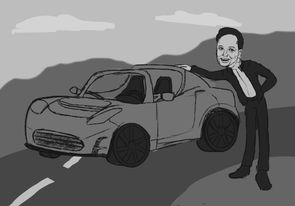
In 2006, Tesla revealed a prototype for their first vehicle – the Tesla Roadster (an illustration of this vehicle can be found at the beginning of this essay). The Tesla Roadster entered production in 2009 and approximately 150 vehicles had been delivered at the conclusion of the year. As Shahan notes in Electric Car Evolution: “The Tesla Roadster became the first production electric vehicle to use lithium-ion battery cells as well as the first production vehicle to have a range of over 200 miles on a single charge” (Shahan: 2015). The Tesla Roadster was commercially moderately received, however a torrent of criticism and a lawsuit for libel and malicious falsehood emerged after TopGear claimed, in a video review (please find a link to the video below), that the Tesla Roadster’s range “was only 55 miles when used ‘heavily’ on the track” (Halliday: 2013). The lawsuit was subsequently dismissed. The Tesla Roadster appealed to many, usually wealthier, early adopters of BEVs given both their starting price of £92000 and their perceived impracticalcility as a two-seater vehicle, whilst the flagship Tesla Model S received widespread acclaim. Development of the aforementioned began in 2007, and the vehicle entered production in 2009. The Model S received an array of positive reviews, and is widely renowned for its range, driving comfort, speed and interior computing unit which provides the consumer with an array of driving feedback mechanisms and entertainment. Commercially, the Model S performed well in the United Kingdom, however it has been commercially out-performed by the Model 3. In many senses, the Model S made the BEV a viable alternative for families and individuals across the country. Currently, Tesla offers the following vehicles in the United Kingdom: Model S, Model 3, Model X, Model Y whilst the Tesla Roadster (Generation 2) is in development and scheduled for release in 2023. Moreover, the entirety of the current Tesla range has the capacity to travel over 200 miles on a single charge which consequently makes them far more reasonable proposal for consumers.The initial development of the Tesla Roadster over a practical vehicle illustrates that “Musk eschewed pressures for near-term profitability to establish Tesla as a technology company that would use lithium ion batteries to disrupt the global auto industry” (Graham: 2021: p16). As we observed previously, Tesla can now be considered a serious competitor to the more traditionally established manufacturers in the United Kingdom and globally. A major role in Tesla’s transformation from a technology driven start-up to a major commercial vehicle competitor is their re-imagining of the vehicle sales and advertising process. Unlike ‘traditional’ ICE powered vehicle oriented dealerships, Tesla offer nothing other than BEVs meaning that they have an array of specialists, specialist equipment and charging equipment to alleviate a number of consumer concerns. Many ‘traditional’ dealerships are unwilling to adapt to the sales and servicing of BEVs, whereas the Tesla sales process is specifically constructed for BEVs and is primarily focused on remote sales processes. Consumers are required to use online tools to book a test drive which is subsequently followed up by an appointment. Furthermore, Tesla is not reliant upon traditional forms of advertising, such as television and radio adverts, to advertise their vehicles and “operate on an advertising budget of $0” (Graham: 2021: p58) and both word-of-mouth communication and a shared cultural perception which has deemed their BEVs to be at the forefront of technological development – irrespective of the accuracy of the aforementioned. As Ferrari are recognised as the foremost supercar manufacturer, Tesla are recognised as the foremost BEV developer. This shared perception allows the consumer to identify the brand, whereas both the internet and brand experts are able to assist consumers in identifying the specific model that best meets their needs. However, as Graham contests, Tesla’s radical new sales approach has a number of drawbacks:
“Consumers develop valuable relationships with nearby community dealerships that are difficult for Tesla to replicate, as Tesla does not want to incur the cost of establishing and training dealers in each community. Moreover, the process of looking at different cars and taking test drives is more spontaneous at a conventional dealer than it is with Tesla” (Graham: 2021: p59)
Furthermore, Tesla have been involved in a number of wider controsivies aside from their involvement in the reproduction of dependent economies in periphery states. For example, in an article entitled Tesla leaders reporting to Elon Musk are far more likely to quit Matousek reported that “Tesla has had an executive annualised turnover rate of 44% for executives who report to Musk during the past nine months. The average annualised rate at seven other companies that an investment management and research firm analysed – Facebook, Amazon, Uber, Lyft, AirBnB and Snap – was 9% in the same time period” (Matousek: 2019) In addition, a number of others have reported issues with Musk’s professional conduct a number of women have recently reported incident of serious sexual harrasmsnent.
Moreover, Tesla vehicles are economically inaccessible to a number of users. The lowest priced Tesla, the Tesla Model 3, starts at £42950 which has similar pricing to a number of executive saloons and SUV. For an individual in my economic position, the best performing and most reliable BEV is inaccessible. Irrespective of the aforementioned, the Tesla Model 3 outsold both executive saloons and SUVs and was the second most popular vehicle of any category in the United Kingdom in 2021. To briefly summarise this section, Tesla are directly challenging a number of issues currently challenging the BEV market by offering vehicles with more than acceptable ranges and a highly innovative sales and advertising process. However, Elon Musk’s challenging workplace behaviour and the economic inaccessibility of the brand presents a challenge to the further proliferation of both Tesla and the BEV market generally.
To conclude, we have observed that the BEV market faces a plethora of challenges which threaten the future proliferation of the BEV. However, we first analysed the current position of the BEV market and found that whilst the electric vehicle share of the overall market is minimal, the BEV sub-section of the electric vehicle market has dramatically expanded in comparison with PHEVs and HEVs. Secondly, we explored and analysed the environmental impact of the BEV and found that whilst the BEVs has an indirect environmental impact in the process of production, they are, on the whole, a serious proposition for alleviating the issues incurred through climate change. Additionally, it was demonstrated that the production of the BEV re-produces economic dependency in periphery states. Three specific issues with the BEV were raised and the mechanisms through which they can be delineated were subsequently presented. Firstly, the issue of ‘range anxiety’ was presented and it was argued that the solution to the aforementioned was two-fold: the BEV requires both a significant development in battery technology and the design and manufacture of BEVs with significant power for specialist uses. Secondly, the lack of a developed BEV charging network was highlighted and it noted that the solution to this particular issue requires both manufacturers and state institutions to invest in more Level 2 and Level 3 chargers. Thirdly, we noted that the ‘sticker price’ is considerably higher than ICE powered vehicles which functions as the foremost hindrance to their further proliferation. Finally, we highlighted the mechanism through which Tesla. Inc are delineating the previously described issues, however it was noted that they too are challenged by both their high ‘sticker price’ and Elon Musk’s challenging professional conduct. The BEV is part of a variety of vital solutions to the climate crisis, however the adoption of the solutions described and an acknowledgment of the issues may ensure their further development and increased popularity.
Bibliography
Bloomberg.com., (2007)., ‘Tesla: A Carmaker with a Silicon Valley Spark’., Available at https://www.bloomberg.com/news/articles/2007-07-29/tesla-a-carmaker-with-silicon-valley-spark#xj4y7vzkg
Elzen, B., (2005)., ‘Taking the Socio-Technical Seriously: Exploring the Margins for Change in the Traffic and Transport Domain’., in Harbers, H.,‘Inside the politics of technology: agency and normativity in the co-production of technology and society’., Amsterdam University Press., p194
Ghosh., B.N., (2019)., ‘Dependency Theory Revisited’., Routledge., p15
Graham, J., (2021)., ‘The global rise of the modern plug-in electric vehicle: public policy, innovation and strategy’., Edward Elgar Publishing., p1, 16, 43, 44, 54, 58, 59, 60
Halliday, J., (2013)., ‘TopGear Row: Tesla loses appear over Jeremy Clarkson review’., The Guardian., Available at https://www.theguardian.com/media/2013/mar/05/top-gear-tesla-jeremy-clarkson
Herincx, G., (2022)., ‘Britain’s best selling new cars of 2021’., Admiral., Available at https://www.admiral.com/magazine/guides/motor/britains-best-selling-new-cars-of-2021
LaMonica, M., (2009)., ‘Tesla Motors founders: Now there are five of them’., CNET., Available at https://www.cnet.com/culture/tesla-motors-founders-now-there-are-five/
Marketline Industry Profile., (2020)., ‘Hybrid & Electric Cars in the United Kingdom’., EBCSCOHost., pp1-59., Available at https://web.p.ebscohost.com/ehost/pdfviewer/pdfviewer?vid=4&sid=766d11b2-16c8-4786-9483-b5ac5eb4378c%40redis., p9, 18, 19, 25
Marin, P and Perales, C., (2021)., ‘Environmental Aspects of the Electric Vehicle’., in Vargas, A., ‘The role of the electric vehicle in the energy transition: a multidimensional approach’., Springer., p94, 101, 102
Matousek, M., (2019)., ‘Tesla leaders reporting to Elon Musk are far more likely to quit than similar executives at Facebook, Amazon and Uber’., Business Insider., Available at https://www.businessinsider.com/tesla-executives-who-report-elon-musk-high-turnover-rate-2019-8?r=US&IR=T
Pattinson, P., (2021)., ‘Like slave and master’: DRC miners toil for 30p an hour to fuel electric cars’., The Guardian., Available at https://www.theguardian.com/global-development/2021/nov/08/cobalt-drc-miners-toil-for-30p-an-hour-to-fuel-electric-cars
Philips, S., (2022)., ‘The ten best-selling electric cars in the UK’., Move Electric., Available at https://www.moveelectric.com/e-cars/ten-best-selling-electric-cars-uk
Shahan, Z., (2015)., ‘Electric Car Evolution’., Clean Technica., Available at https://cleantechnica.com/2015/04/26/electric-car-history/
Tesla., (2022)., ‘Gen 3 Wall Connector’., Available at https://shop.tesla.com/en_gb/product/gen-3-wall-connector
TopGear., (2020)., ‘Vauxhall Corsa-e review’., Available at https://www.topgear.com/car-reviews/vauxhall/corsa-e
TopGear, (2021) ‘Ford Mustang Mach-E review’., Available at https://www.topgear.com/car-reviews/ford/mustang-mach-e., a
TopGear., (2021)., ‘Mercedes-Benz EQS Review’., Available at https://www.topgear.com/car-reviews/mercedes-benz/eqs., b
WhatCar?., (2022)., ‘Smart EQ ForTwo Review’., Available at https://www.whatcar.com/smart/fortwo-coupe/city-car/review/n18076
Referenced Video
TopGear Review of the Tesla Roadster- https://www.youtube.com/watch?v=JKtK493sGAk
 After the eerie: reflections on Year Omega